
The Ultimate Guide to Compressed Air in Pharmaceutical Manufacturing: Usage, Qualification, and Testing
COMPRESSED AIR
PharmaGyan
5/23/20264 min read
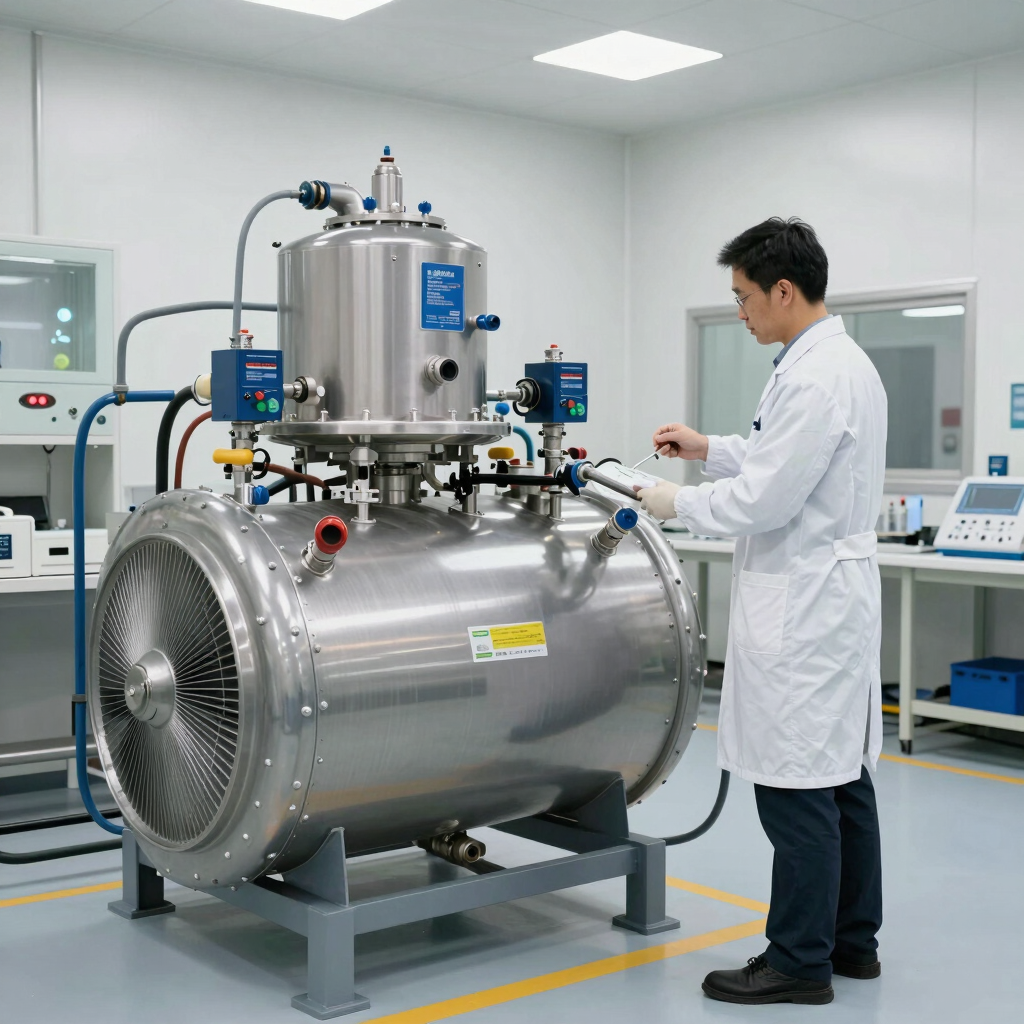
Whether you are designing a new facility or upgrading a legacy system, understanding the usage, applications, and strict qualification guidelines for compressed air is essential to maintaining product safety and regulatory compliance.
Usage and Applications
In pharmaceutical production, the application of the compressed air dictates the level of purity required. Compressed air systems are broadly categorized into two types:
Direct Impact Systems: These systems provide air that comes into direct contact with the product, excipients, or primary packaging. Applications include raw material transport, bulk solid and powder conveying, drying processes, product packaging, and supplying motive air for critical machines.
Indirect / No Impact Systems: These systems do not contact the product or its components. They are generally site or building systems used for side activities, analytical air, actuating process control valves, or waste disposal.
Why Qualification is Crucial
When ambient air is compressed, it brings along moisture, hydrocarbons, particulate matter, and potentially microorganisms. If left unchecked, these contaminants can lead to severe consequences:
Moisture causes rust and increased wear on moving parts by washing away machine lubrication, which can lead to sticking valves, clogged orifices, and costly shutdowns.
Condensation provides a breeding ground for bacterial formation, directly compromising the sterility of the final product.
Oil and Solid Contaminants can emulsify with water to damage system components, alter the color and taste of products, and create toxic impacts in sensitive biological processes.
To mitigate these risks, the compressed air system must be meticulously qualified according to established regulatory standards.
Regulatory Guidelines and Framework
The baseline for specifying compressed air purity is ISO 8573-1:2010, which classifies air quality based on the concentration of particles, water, and oil. For pharmaceutical applications, ISO 8573-1:2010 Class 2 is frequently used as an initial specification.
However, relying strictly on ISO Class 2 is not always sufficient. For sterile pharmaceuticals, the particulate and microbiological quality of the compressed air must be equal to or better than the "at rest" conditions of the cleanroom grade (e.g., Grade A, B, C, or D) into which the gas is introduced. Pharmacopoeias such as the European Pharmacopoeia (EP) and the United States Pharmacopeia (USP), along with ISPE guidelines, define specific testing limits and analytical requirements.
Qualification Test Details and Acceptance Criteria
To validate and qualify a compressed air system, a suite of tests must be performed under standard operating conditions. Here are the key testing parameters, their methodologies, and their acceptance criteria:
1. Dew Point / Moisture Content
Test Method: Monitored using an electrolytic hygrometer or calibrated dew point transmitter. Reference ISO 8573-3.
Acceptance Criteria: Pressure dew point of $\le -40^{\circ}C$ (ISO 8573-1 Class 2). Alternatively, Not More Than (NMT) 67 ppm v/v of water vapor as per the EP.
Rationale: Eliminates the risk of liquid condensation which causes rust, instrument failure, and creates an environment for microbiological growth.
2. Oil Content (Mist and Vapour)
Test Method: Evaluated using gas chromatography or specific detector tubes as per ISO 8573-2 (aerosols) and ISO 8573-5 (vapours).
Acceptance Criteria: $\le 0.1 mg/m^3$ for total oil (liquid, aerosol, and vapor) to meet ISO 8573-1 Class 2 and EP requirements.
Rationale: Prevents product contamination and emulsion with system moisture, especially critical when air is supplied by oil-lubricated compressors.
3. Non-Viable Particulate Count
Test Method: Measured using a laser particle counter connected to the system via a high-pressure diffuser, following ISO 8573-4.
Acceptance Criteria: For ISO Class 2, limits are $\le 400,000$ particles ($0.1-0.5 \mu m$), $\le 6,000$ particles ($0.5-1.0 \mu m$), and $\le 100$ particles ($1.0-5.0 \mu m$) per cubic meter. Crucially, limits must be adjusted to match the cleanroom classification (e.g., Grade A/B) where the air is exposed.
Rationale: High-velocity stainless steel pipe networks and valves can shed particles. Controlling particulates prevents direct product contamination and safeguards critical equipment.
4. Viable Microbiological Contamination
Test Method: Evaluated using partial flow sampling via a slit-to-agar impaction tester according to ISO 8573-7.
Acceptance Criteria: Limits must parallel the cleanroom bioburden standards. For sterile applications (Grade A), the air must typically be sterile (< 1 cfu/$m^3$ or $\le 0.03$ cfu/ft³), while non-sterile applications typically allow NMT 5 cfu/$m^3$.
Rationale: Ensures that the compressed air does not introduce bacteria, yeast, fungi, or endotoxins that could compromise the sterility and safety of the final product.
5. Gaseous Impurities
Test Method: Analyzed via gas chromatography, infrared analyzers, chemiluminescence, or specific detector tubes according to ISO 8573-6 and EP monographs.
Acceptance Criteria:
Carbon Monoxide (CO): NMT 5 ppm v/v.
Carbon Dioxide ($CO_2$): NMT 500 ppm v/v.
Sulphur Dioxide ($SO_2$): NMT 1 ppm v/v.
Nitrogen Oxides (NO + $NO_2$): NMT 2 ppm v/v.
Rationale: Verifies the absence of toxic or hazardous gases drawn in from atmospheric pollution (such as nearby exhaust fumes) that could disrupt biological processes or harm patient health.
Conclusion
Qualifying a pharmaceutical compressed air system is not a one-and-done event. Because compressed air interacts so intimately with the manufacturing environment and the final product, baseline standards like ISO 8573-1 Class 2 must be combined with strict pharmacopoeial (USP/EP) and cleanroom-specific guidelines. By executing rigorous Installation, Operational, and Performance Qualifications (IQ/OQ/PQ) and maintaining an ongoing monitoring program for moisture, particulates, and gases, manufacturers can ensure their "Fourth Utility" operates safely, efficiently, and in full compliance.